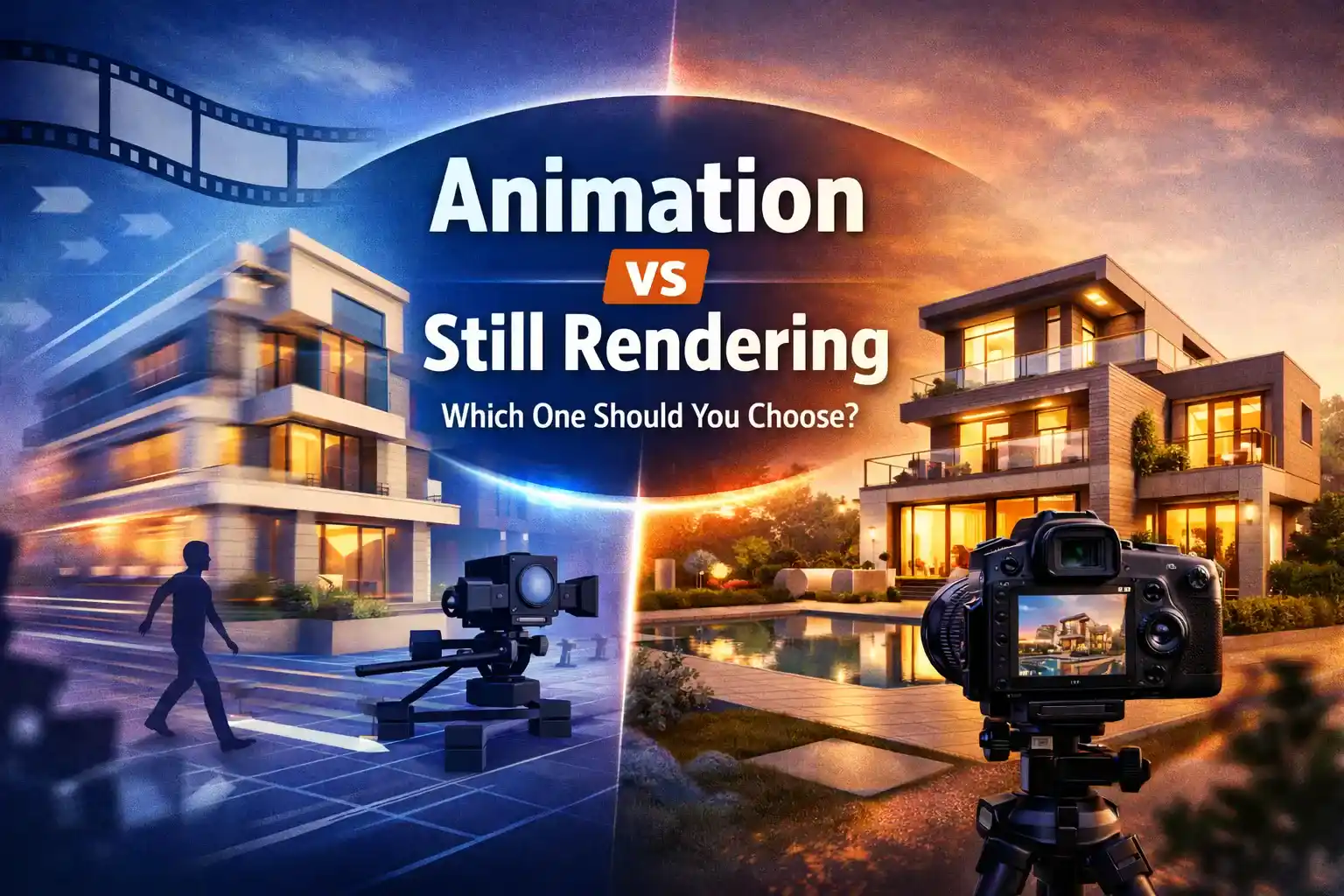
Animation vs Still Rendering: Which One Should You Choose?
Confused about choosing between Animation vs Still Rendering? This question comes up again and again. However, the choice between these two things can affect the outcomes. It can be in the form of a budget or client satisfaction. With the increase in technology, making the right decision is one of the important tasks before the design phase. People now trust visuals, not words. They want to see how their building will look before even a single brick is laid.
That is why the investors and building owners rely on three-dimensional images and animation to make perfect decisions and save their budget. If you are also in search of reliable architectural visualization services then make sure to invest a good amount of time in research. Choose the company with the right expertise and experience to get the desired results!
This guide is best for investors to see Which One Should You Choose between Animation vs Still Rendering!
What Is Still Rendering?
Still rendering is also known as static rendering or a still image render.
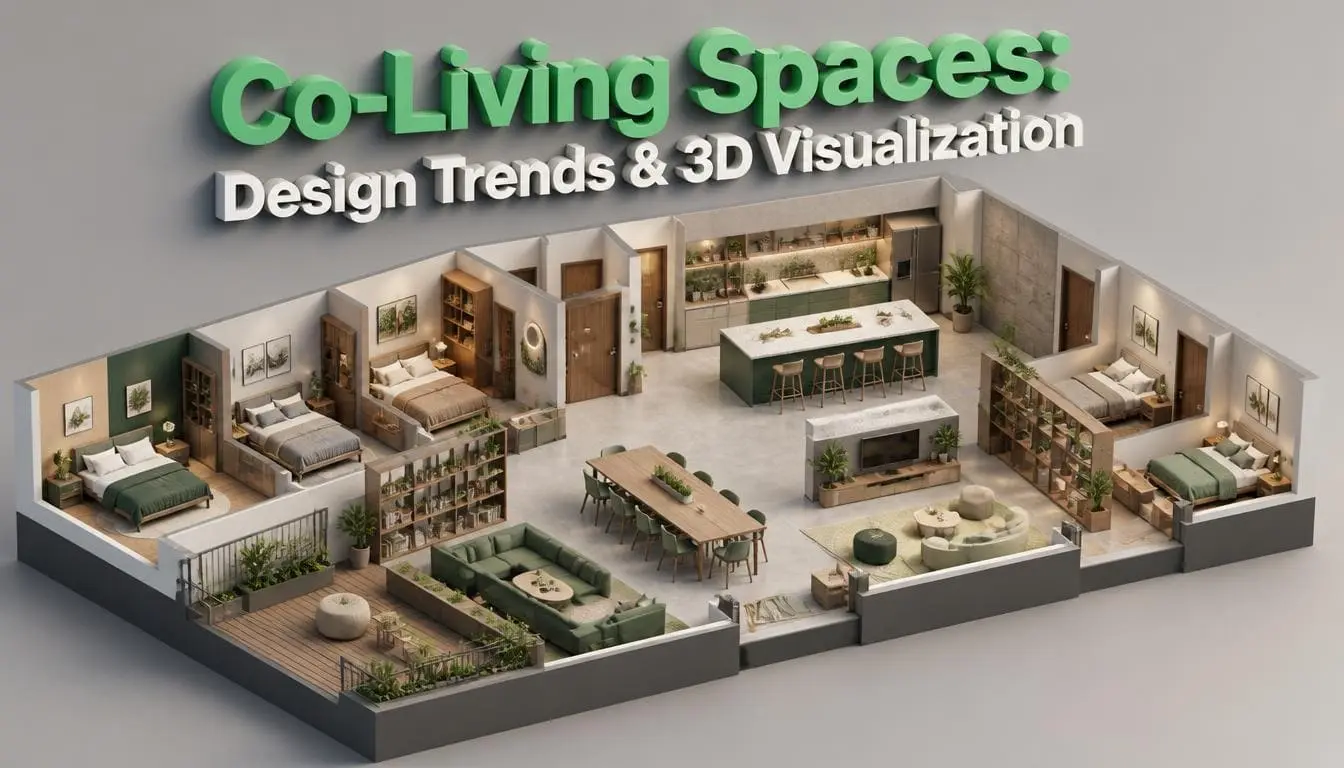
This type of rendering produces a single and realistic three-dimensional scene. It is like a perfect photograph of a space that does not yet exist.
These types of images have perfect lighting, textures, and other details that make them look real. The expert renderers that deliver still rendering services add perfect details into the scene that make them photo-realistic.
This helps to understand the design in a better way!
Still renders are the industry’s bread and butter.
They are fast to create and easy to share. Almost one-click 4K stills from modern rendering engines often take under two minutes.
The best advantages of still rendering are:
- Lower cost and faster turnaround
- High detail control
- Easy to share
- Perfect for approval stages
- Ideal for marketing
- Versatile formats
What Is Animation Rendering?
Animation rendering is a complex task to complete. It produces a sequence of frames that are played in motion.
They are in the form of walk-throughs or cinematic tours of the space.
A complete animation might play anywhere from 30 seconds to several minutes. A perfect animation combines architectural accuracy with cinematic techniques that are:
- camera angles
- depth of field
- sound design, etc.
Animation provides perfect outputs that still images cannot. This means experiencing by moving through space.
You feel the flow from the entrance to the living room and have an idea about the light in a better way!
The advantages of animation rendering are:
- Immersive spatial experience
- Stronger emotional storytelling
- Ideal for complex or large-scale projects
- Highly effective for marketing and social media
- Better for public presentations
- Demonstrates functionality
When to Choose Still Rendering
Still rendering is the smarter choice in the following situations:
In early design stages when ideas are not finalized. You need fast visual feedback for internal review.
The second situation is when you have a tight budget. This means when you cannot afford animation expenses.
For Regulatory approvals when authorities require static images for submissions.
For heavy projects that require a detailed view of the quality of material and textures.
Moreover, when the client needs quick iterations!
When to Choose Animation Rendering
It must be chosen for Large-scale or complex projects that have:
- Masterplans
- urban developments
- mixed-use towers, etc
For High-stakes sales and marketing where emotional effect is very important.
It is also important in social media campaigns to showcase animated content across different platforms.
When you want to stand out in the competition!
Moreover, for virtual reality integration and animated walkthroughs. Getting expert animation services from a reliable company is the wisest decision.
The Role of AI and Real-Time Rendering
The decision between animation and still effects is due to the use of artificial intelligence.
AI automates technical stages such as
- material selection
- lighting setup
- post-processing
Machine learning lets the systems adapt to the visual patterns. This improves results over time.
This means that what once took days to animate can now be generated in hours.
According to the State of Architectural Visualization 2024–2025 report. The use of rendering in everyday architectural processes has risen a lot as compared to previous years.
Advanced engines now allow architects to produce both high-quality stills and animation.
This reduces the need to choose between the two formats altogether.
The Hybrid Approach
The most effective visualization strategies don’t force both choices.
Studios are increasingly delivering still renders for approvals. When they are combined with short animations, they are the best tool for marketing on social media.
Investors can quickly sell their properties with the help of these realistic visuals.
However, the cost of animation is much higher than it still renderings.
A smart project might include:
- 3–5 hero still renders for the main marketing campaign
- A 60–90 second cinematic animation for investor pitches
- A short looping GIF or video clip for social media
- A real-time walkthrough for client review sessions
Conclusion
So choosing between Animation vs Still Rendering depends on your needs. If you have a high budget and you have to sell your property faster, then get an animation. The right choice depends on your project stage and goals. Most bigger companies invest in animation to impress new clients on social media. However, the best recommendation is to get help from experts.