Floor Plan Presentation Techniques for Architects
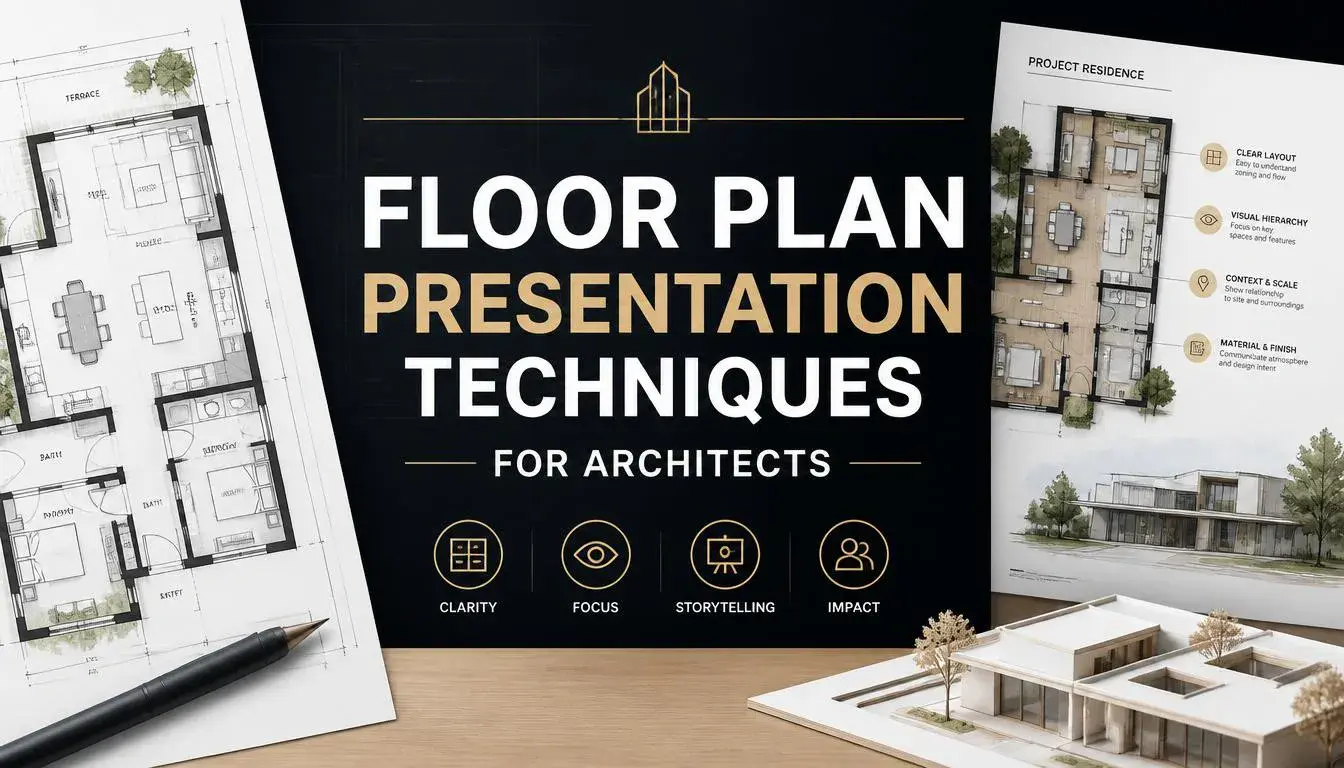
In the modern competitive architecture and real estate landscape, presentation matters as much as how you design it. An expertly designed architectural floor plan presentation helps communicate the purpose of the design to the clients. It tells a story!
In this modern industry, architects have access to a powerful range of tools and methods. They create the best photorealistic renders and outclass digital walkthroughs like you are physically present in the property. So, you need to fully understand the full range of presentation options to get approvals and impress your clients.
Read this guide to explore the best floor Plan Presentation Techniques for Architects!
Why Presentation Technique Matters in Architecture
An architectural floor plan is the most important document of any building project. It shows how the spaces connect and how a structure functions at a human level.
Just think for yourself, what is better? A realistic image/animation or a black and white drawing?
Your imagination is only captured by digital renders. That is where professional architectural presentation techniques become so important. It converts your concepts into an amazing 3D experience.
Keep in mind that the way you present your architectural floor plans shapes perception. It helps to win approval.
Companies that invest in high-quality floor plan visualization. They consistently report stronger client engagement and fewer revision cycles.
How Architects Present Floor Plans
1. 2D Floor Plan Design
Every presentation starts with a clear 2D floor plan design.
This is the old top-down orthographic drawing that shows walls, doors, etc.
However, a clean 2D drawing remains the clearest way to communicate technical information.
The major elements of an effective 2D presentation include:
- Consistent line weights to distinguish structural from non-structural elements
- Color-coded zones for different program areas
- Furniture silhouettes to demonstrate scale and usability
- Labeled dimensions and room names for clarity
- North arrow and scale bar for spatial orientation
Modern professional floor plan design tools allow architects to produce 2D drawings that serve both technical and marketing purposes.
2. 3D Floor Plan Presentation
It is right that 2D drawings are precise!
But they can be difficult for non-architects to read. A 3D floor plan presentation solves this by adding depth and spatial context.
These views are also in a top-down perspective but with the walls rendered in three dimensions. The furniture is placed realistically and materials are applied to the surfaces.
Benefits of 3D floor plans include:
- Instantly readable by clients with no architectural background
- Clear depiction of ceiling heights, mezzanines, and level changes
- Ability to show natural light and shadow patterns
- Integration of material finishes and color palettes
- Easier comparison of multiple layout options side by side
3. Photorealistic 3D Floor Plans and Rendering
If you want to impress an investor, then getting photorealistic 3D floor plans is the best way! By using advanced rendering software and lighting simulation, the spaces look so real with realistic textures and other details.
3D Rendering Services provided by specialist studios use physically-based rendering engines. It helps to produce imagery which is different from photography. So, partner with professional 3D Floor Plan Rendering Services to present confidently even before a single brick is laid.
4. 3D Model and BIM Integration
A 3D model built within a Building Information Modeling platform consists of maximum information.
Revit or ArchiCAD allows teams to develop a digital twin of the building. The data about every component is available.
From a BIM model, teams can extract:
- Coordinated floor plans at any level
- Detailed sections and elevations
- Quantity take-offs and cost estimates
- Energy performance analysis
- Clash detection reports for MEP coordination
Such platforms connect architectural floor plan visualization techniques directly to construction documentation. This makes it the best route from design to delivery for large or complex projects.
5. 3D Interior Visualization Services
If you want to feel a space, then get 3D Interior Visualization Services to deliver rendered scenes from interior viewpoints. It shows how a room will look from the inside.
These visualizations are particularly powerful for:
- High-end residential design presentations
- Hotel and hospitality interior design concepts
- Retail fit-out proposals
- Showroom and model apartment staging
6. 3D Walkthrough and 360° Virtual Tour
If you want to explore floor plan presentation ideas then one of the best ones is animated 3D Walkthrough videos and 360° virtual tours. However, a 3D Walkthrough is a pre-rendered animation that guides the viewer through spaces. It shows the flow of the design.
A 360° virtual tour controls the direction and movement using a mouse or VR headset. The clients now explore the space at their own pace.
Both formats offer different advantages:
- Walkthroughs are ideal for presentations
- Virtual tours suit online listings
- Both formats dramatically reduce the number of in-person site visits required
Best Floor Plan Software for Architects
Choosing the right tools is as important as choosing the right technique!
- Autodesk Revit
- AutoCAD Architecture provides architectural drawing presentation and 2D/3D drafting
- SketchUp
- Lumion
- Enscape
- Archicad is best for digital floor plan presentation
Selecting Architectural Presentation Software depends on project scale, team size and client expectations.
If you want to get the desired results, you must apply the best Floor Plan Presentation Techniques in this guide!
Modern Floor Plan Presentation
A modern floor plan presentation is increasingly enhanced by the latest technology.
Experts use Unreal Engine and Twinmotion that allow architects to produce 3D visualization. Plus, these cloud-based collaboration tools allow clients to review floor plan layout ideas.
For firms looking to compete at the highest level. They must invest in floor plan design services because it is a market expectation.
Conclusion
In short, from the accuracy of a drafted line to a virtual reality tour, professional architectural presentation methods have never been more powerful. The architects and firms that have full control over it. They are winning the trust of the clients and getting approvals.