
Mission Revival Architecture Explained: Origins, Materials and Style Traits
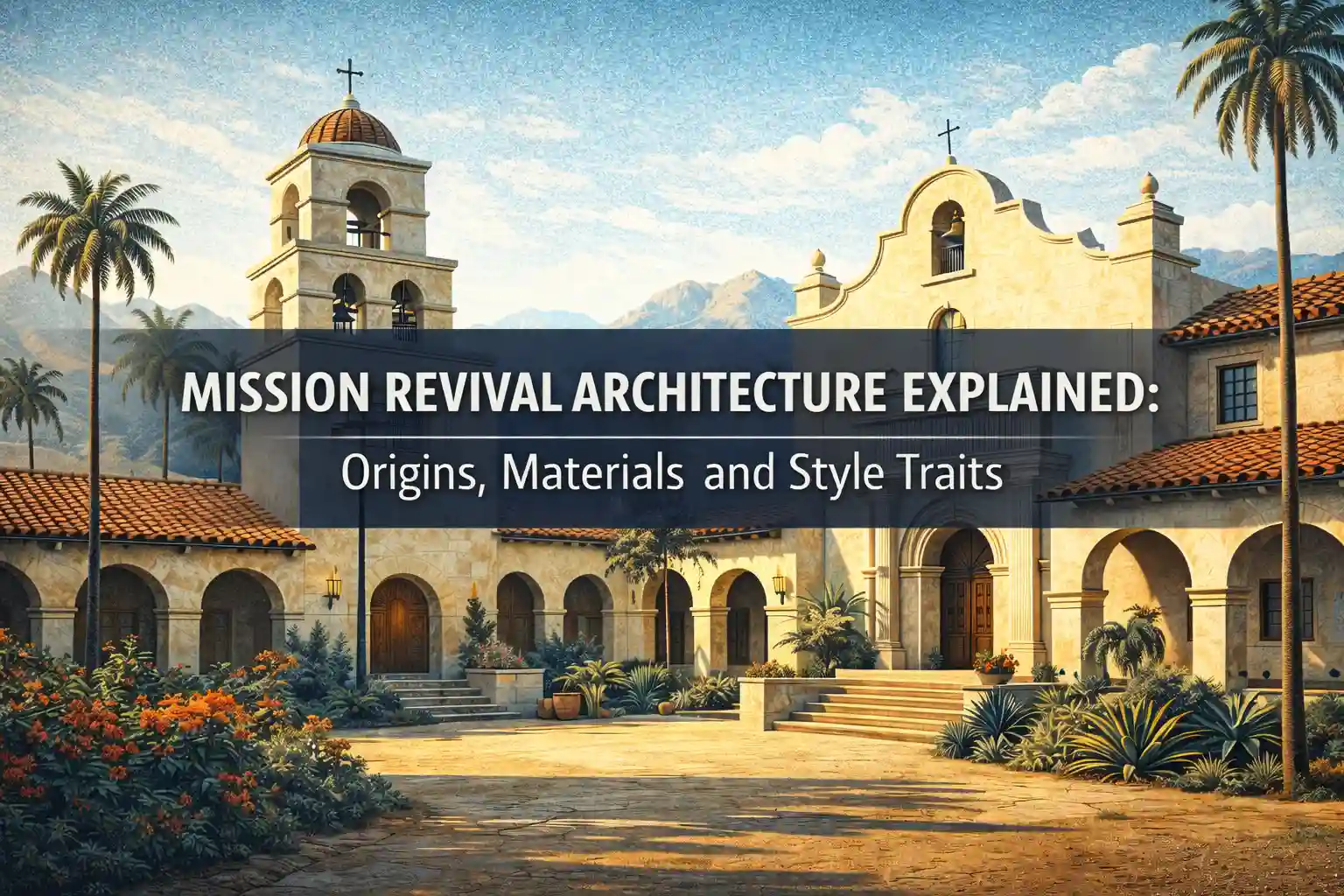
Mission Revival Architecture is a building style that first became popular in California. It was inspired by the old Spanish buildings. They were built in the 18th century by the settlers. It was easy to recognize because it had:
- curved rooflines
- smooth white stucco walls
- red clay tile roofs
It was not fancy, rather focused on simple and sturdy shapes. Plus, it also had arched windows and galleries. This was to provide a cool feel. This was perfect in the warm climates of the American Southwest.
However, this style is still used in homes, civil buildings, and other places in the USA. If you are planning to build any type of developmental project. It is recommended to get the Best Architectural Rendering Services and achieve your desired designs.
Read this blog to understand Mission Revival Architecture and its Origins, Materials, and Style Traits!
Origins
Mission Revival architecture started on the basis of copying the look of old Spanish missions built in the late 1700s. Those original missions were simple and made from mud bricks. Stones were also used in those buildings. The major reason was that the builders did not have fancy tools or materials.
After that, people got bored with the complicated Victorian house styles. They wanted something that provides a more local feel.
Several things made this Architecture types famous:
- A novel called Ramona made people fall in love with the romantic idea of old California.
- California showed off a huge Mission-style building in Chicago.
- Train companies built stations that looked like missions. They wanted to make travelers feel like they were on a grand adventure.
- People liked the style because it used handmade materials
Materials
The material usage is limited in this architectural style. It was designed to copy the original mission buildings.
The most characteristic materials of the style include:
- White Stucco Walls are smooth and bright. They are painted white or cream. It looked like the old mud-brick buildings stayed cool in the hot sun.
- Red Clay Roof Tiles are the famous curved tiles you see on top. They look great against the white walls.
- Thick Brick and Adobe were used in many buildings. This helps the inside of the house stay nice and chilly even when it’s hot outside.
- Dark metal was also used for things like window bars.
- Builders used dark wood for big front doors and the ceiling to make the home feel handmade.
The choice depended on the climate. In the hot regions of California, Arizona, and New Mexico. They used thick stucco walls and clay tile. It helped them keep the natural insulation. Plus, it kept the interiors cool in summer and warm in winter.
Defining Style Traits
If you seek help from the Top visualization company then you can easily combine its traits with your modern concepts.
However, individual buildings are different in scale and complexity. The major traits of this style are:
- The building’s most distinctive element is the complex, sometimes bell-shaped, which breaks the roof’s profile with complex curves. Over the roofs, these parapets repeat the shapes common in the outlines of the historic missions. It is providing the style with its identifiable skyline profile.
- Red-tiled, low-pitched roofs: Roofing is almost invariably finished with the characteristic terracotta barrel tiles, while the low roof pitch enhances the building’s horizontal spread and allows the curvilinear parapets to contrast with the sky.
- Arched openings: Round or segmental arches are common in the doorways, window openings and in the covered walkways and loggias. The row of arches constructed on piers or columns, called arcade, is a characteristic element taken from the mission cloisters.
- Wide, shaded verandas and porches: Deep eaves and covered porches help to shield the intense southwestern sun, providing transitional outdoor living spaces that are typical of a mild climate.
- Bell towers and espadanas: Bell towers or campanarios and espadanas, which are flat, wall facades with openings for bells, are features found on larger civic, religious, and institutional Mission Revival buildings, which directly quote the defining features of the historic California missions.
- Smooth, planar wall surfaces: The walls are usually large, unbroken, and sparsely decorated, and ornamentation is minimal.
- Central courtyards are designed with rooms and wings extending from a central patio or courtyard, a spatial type that descends from Spanish colonial planning and serves as an outdoor room.
- Low horizontal massing: Unlike the Victorian period, which aspired to more vertical elements, the Mission Revival style is focused on horizontal massing that stretches out and ‘hugs’ the landscape, creating a feeling of solidity and of being rooted in the region.
Conclusion
More generally, Mission Revival is a brief but remarkable moment in American architecture where designers, patrons, and the public all simultaneously looked to the past. The style was an attempt to build an American home from the East Coast classicism and the European historicism. The style is still applied in adapted train stations, in new buildings. If you want to build your structures by combining different traits, then get help from expert visualizers. They offer three-dimensional images and animation. This helps to make the perfect decisions faster without wasting money.