Palladian Architecture: Definition, History, Key Types, and Modern Trends
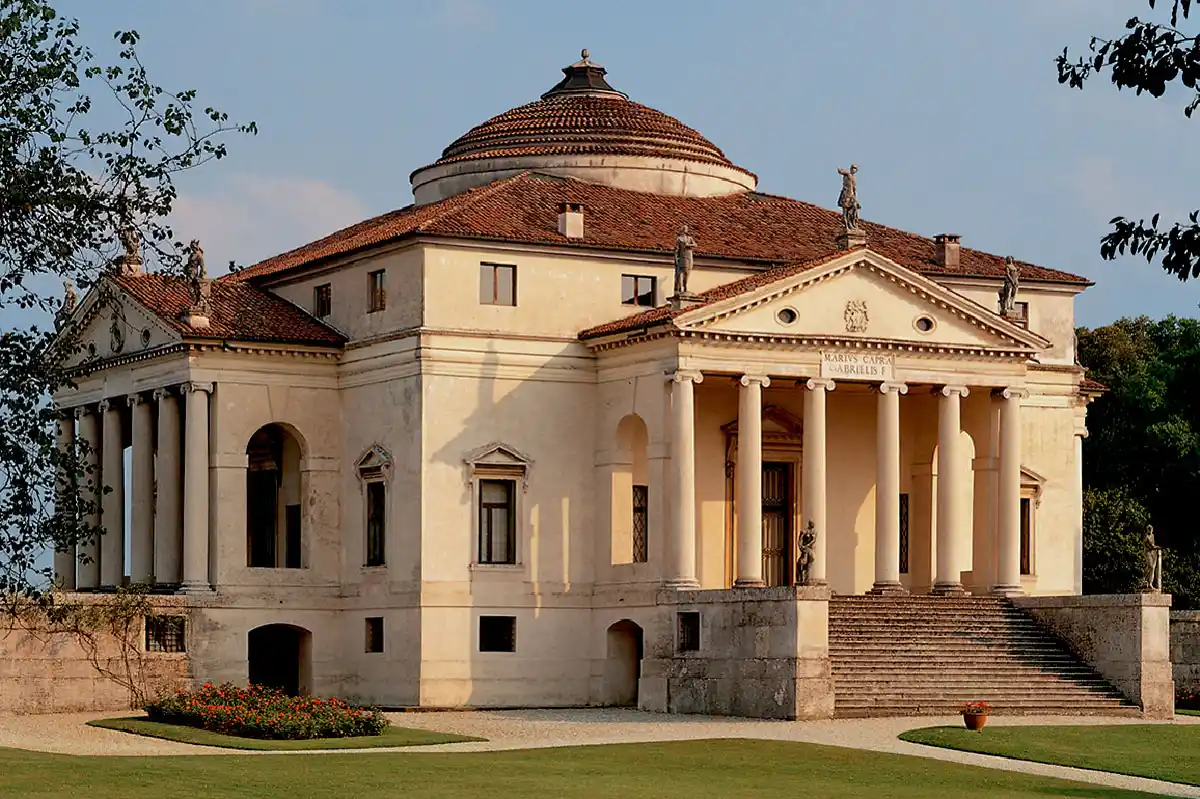
Palladian architecture is a type of architectural style. It was inspired by the work of the architect Andrea Palladio. His main focus was on symmetry and the rules of classical architecture. This was mainly derived from ancient Greek and Roman culture. However, this type of style is still inspiring modern buildings.
If you are experiencing design issues, then you should visualize your concepts in 3D form. For that, architectural rendering services are recommended to see what your future building looks like. This saves a lot of time and budget.
Short History
Andrea Palladio was born in 1508 in Padua. He was the son of a stonemason. He started his career working with stone. Life changed at age 30 when a scholar named Gian Giorgio Trissino noticed his talent.
He went to Rome and noticed ancient Greek and Roman buildings. This greatly inspired Palladio.
Palladio studied Renaissance buildings. He also loved the work of Bramante and Raphael. This helped him understand the beauty and symmetry. On the basis of which he designed plenty of villas, palaces, and churches.
His most popular works include:
- The Villa Rotonda
- Basilica Palladiana
- Villa Barbaro
- San Giorgio Maggiore
- Redentore
Over time, Palladian architecture was loved in many parts of the world. It includes Germany, Russia, and even India during British rule.
Different types of architectural styles
1. Villas and Country Houses
The villa is one of his most important ideas in architecture. Commonly, in Italy, people used to build their farm work areas in the same building as their main house. Moreover, they also made the living floor high above the ground.
Palladio used such designs to create grand and beautiful spaces. The features of such buildings are:
- Central block with temple-front portico
- Piano nobile (main floor) elevated above ground level
- Symmetrical design with mathematical proportions
- Integration with the landscape
- Often featuring four identical facades (as in Villa Rotonda)
2. Urban Palaces
Palladio created basic types of palaces between 1550 and 1556.
- The Palazzo Chiericati had a big open porch. The front was divided into three parts to highlight the center.
- The Palazzo Iseppo Porto showed how Palladio used ideas from old Roman houses. The front design was inspired by Roman Renaissance palaces.
3. Churches and Religious Buildings
The church design of Palladian architecture styles was also very important.
Daniele Barbaro and his brother Marcantonio began creating their own special style for religious buildings. His churches had the following features:
- Temple-front facades
- White stone construction
- Classical columns and pediments
- Harmonious proportions
- Integration of multiple vaulted areas divided by screens of columns
You can design your types of spaces by visualizing the spaces in a virtual form. A reliable Architectural Visualization Company assists AEC experts in making the right decisions before construction begins.
Modern Trends
In the 21st century, Palladio is still one of the most important architects. Modern architects use his design ideas. However, they do not fully use the old ideas. They do not copy classical columns or details.
Natural Modern Design
Using Palladian Style Architecture in your living spaces. The use of symmetry is common in such styles. Areas are divided into different zones. It makes sure that the performance of the buildings is not compromised. The modern look consisted of the following features.
- Large Palladian windows fill rooms with daylight.
- The original Palladian focuses on the use of nature with modern design.
- Pairing classical detailing with modern materials like glass, metal, or exposed concrete
Residential use
Modern homeowners are using Palladian features through:
- Design your house facades with symmetrical windows to create a clean look.
- Reduce the size of the Palladian window for a luxurious look in complex spaces.
- Modern interpretations incorporate clean-lined pediments or textured columns to create a classical look that suits a modern, minimalist setting.
Current Design Philosophy
Whether you are constructing a traditional house or contemporary buildings, Palladianism design principles are still applicable as a mix of functionality and aesthetics. This design style has been popular due to its rules.
The functionality of Palladian architecture makes it the best example of modern design. The focus on simplicity and the use of nature is the main thing.
Ongoing Influence
Through diversity, Palladian architecture has been an inspiration either directly or indirectly:
- Scholarly research at the Center for Palladian Studies and other places
- The Palladio Award in classical and traditional design excellence
- UNESCO World Heritage designation for Palladio’s works in Vicenza and the Veneto
- Active protection and tourism around Palladian masterpieces
Conclusion
Palladian architecture is a lot more than a period style—it expresses eternal values of proportion and beauty which continue to appeal in current design. While Andrea Palladio was designing his 16th-century villas in the Veneto, to contemporary low-energy housing and computer-generated designs. However, the Palladian tradition shows how architecture has a powerful potential for universality.