Renaissance Architecture: Definition, History, Key Types, and Modern Trends
Renaissance architecture is a style that began in Europe during the 1400s. It was the time when people were inspired by the design of Greek and Roman buildings. This type of style brought back clean lines, perfect shapes, and detailed decoration.
If you are someone who is inspired by Renaissance Style Architecture then you must read this blog to understand all about it. From its history to all the types, we have discussed it in this article.
READ OUR BLOG TO UNDERSTAND THE HISTORY, TYPES, AND MODERN TRENDS OF RENAISSANCE ARCHITECTURE!
What is Renaissance Architecture?
Renaissance architecture gained popularity from the 15th to the early 17th century. It was popular due to the systematic arrangement of columns, pilasters, and lintels. The features of this Renaissance Architecture styles are:
- Symmetrical facades
- Doric and Corinthian columns
- Mathematical precision in proportions based on the human scale
- Domes and barrel vaults inspired by Roman engineering
- Rustication of stone on lower floors for visual weight
- Pilasters as decorative vertical elements
- Rounded arches replacing Gothic pointed arches
- Emphasis on horizontal lines rather than vertical Gothic aspirations
Short History of Renaissance Architecture
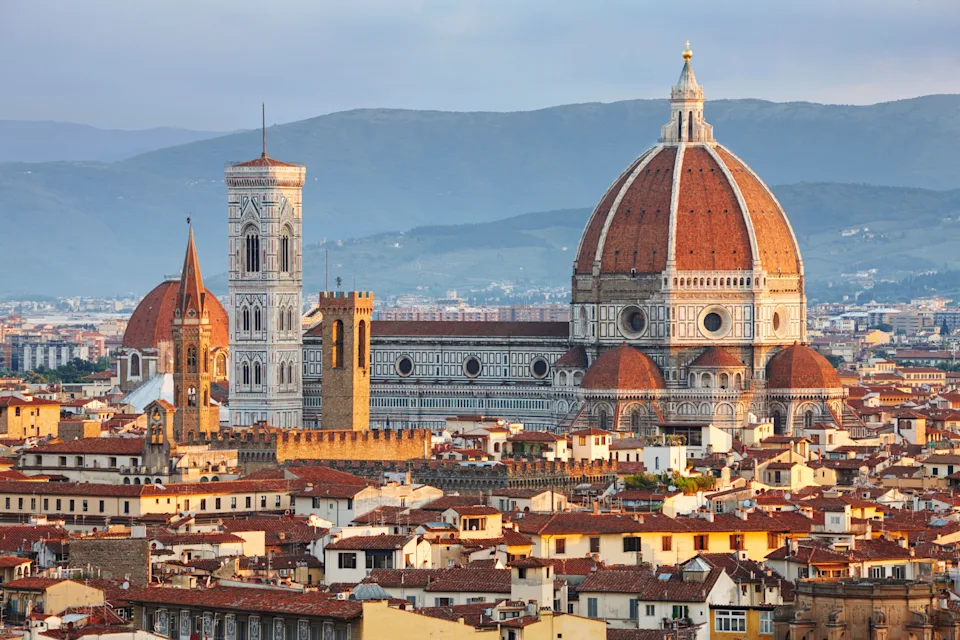
The Renaissance style of architecture started in Florence, Italy, around 1420. It started when Filippo designed the famous dome of the Florence Cathedral.
This dome showed new engineering skills. The main purpose was to bring back the beauty of old Roman and Greek designs.
However, Renaissance architecture developed in different stages. As time passed by, the classical designs were slowly added to the design.
In the Late Renaissance, architects started to use unusual shapes and uneven designs.
Modern architects combine old and new methods by outsourcing Architectural Rendering Services and visualize what they think.
Different types of architectural styles
Religious Architecture
Churches became those buildings that were being tested for the new ideas. Architects started using simple shapes. The common shapes were circles and squares. It helps to design different parts of the buildings.
St. Peter’s Basilica in Vatican City is an example of Renaissance Architecture. It has a:
- round plan
- classical columns
- a small dome
Civic Buildings and Palaces
Rich families built large city palaces to show their wealth. Its great example is The Palazzo Medici Riccardi in Florence. It was popular due to:
- It’s rough stone on the lower floor
- smoother walls above
- big projecting roofline
Public buildings in this type of style showed how government architecture could look orderly and inspired by classical styles.
Villas and Country Houses
Andrea Palladio changed home design with his villas. His famous Villa Rotonda copies the front of the temple style. It is designed for all four sides of the building. However, it became one of the most important buildings in Western architecture. These villas fit naturally into the scenario. It keeps clean, balanced, and geometric designs.
Urban Planning
Renaissance architects considered cities to be organized places. Pienza, rebuilt by Pope Pius II, is an early example of a city designed with a clear plan. The idea of ideal cities was not to be fully built. However, it influenced the design of town squares and public spaces all over Europe.
Modern Trends and Influence
Even though we may not always perceive it, Renaissance architecture continues to influence contemporary designs. During the 18th and 19th centuries, Neoclassical architecture brought Renaissance architectural elements to designs of many public edifices, libraries, museums, and institutions worldwide.
Beaux-Arts architecture carried the traditions into the twentieth century. If you also want to use some of its ideas in your buildings. You can rely on a professional Architectural Visualization Company and get 3D views of your ideas. This way, you can save your budget by investing in the right thing.
However, this type of architecture influences modern trends by:
- Adaptive reuse balances the original Renaissance architectural traditions with the addition of new modern functions.
- Postmodern architecture draws on the Renaissance for its scale and ornamentation.
- Renaissance principles of sustainable design, particularly passive ventilation and the introduction of daylight, are incorporated into modern designs.
- Complex geometric relationships, the same as those studied in the Renaissance, are made digitally.
- Classical revival movements advocate for traditional proportions and craftsmanship to be incorporated into new designs.
- Insights into human-scaled design, the relationships of parts to wholes, and the urban integration of buildings are gained by modern architects studying the Renaissance.
- The design of digitally fabricated buildings, crafted with modern technology, includes classical detailing that, in the Renaissance, would have required extensive and meticulous manual craftsmanship.
Final Words!
Renaissance architecture changed the building work from a simple design to a complex one. Architects became educated and learned more about maths and about more designs. Their main focus was on the symmetry. Not only that, classical styles were also favourites of architects. These types of old styles still influence modern architects.