3D Rendering Pricing Guide by Project Type
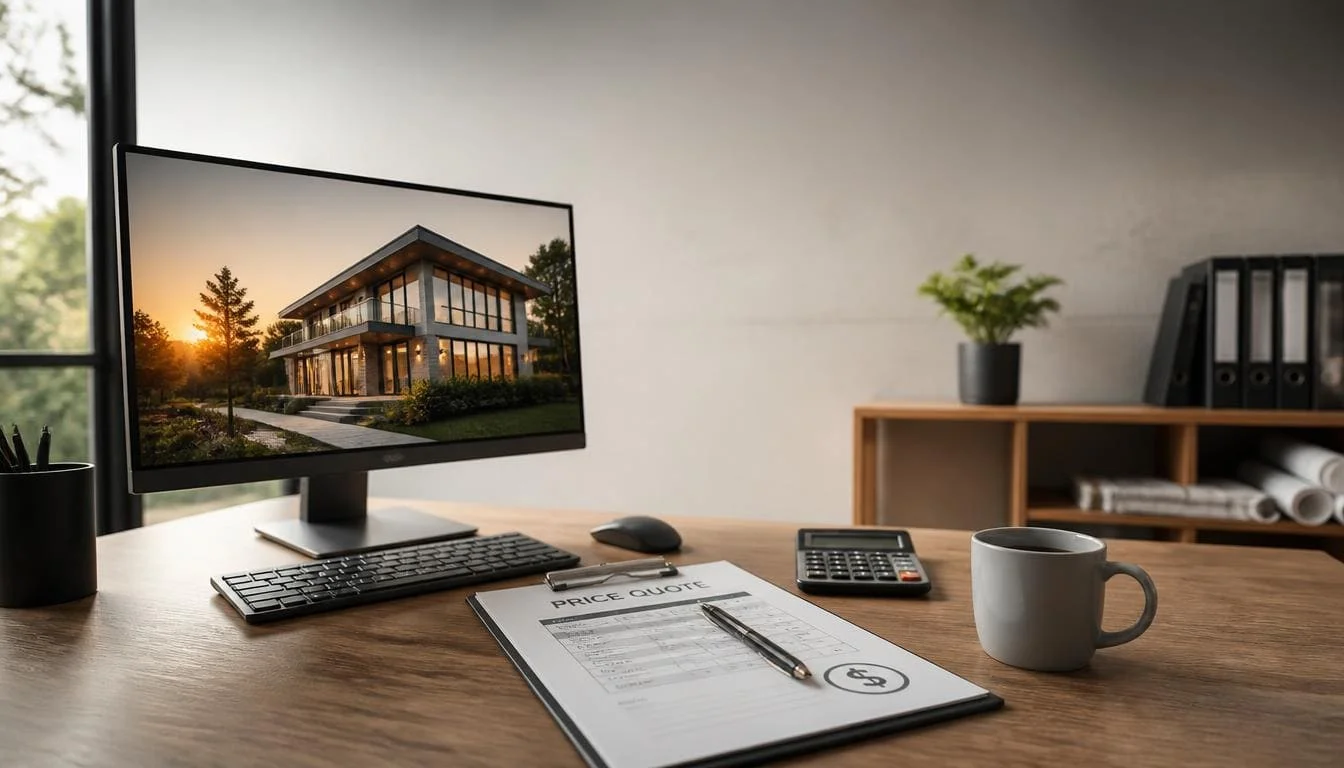
Most professional 3D renderings cost $250 to $2,500 per image in 2026. Interior views start near $250, while detailed exteriors and aerial shots run $800 to $3,000. Walkthrough animations start around $2,500 per minute. Large commercial projects with 20+ images are usually priced as one package, often $28,000 to $42,000. The final price of 3D renderings depends on four things: render type, how much detail you need, how many images you order, and how fast you need them.
Send the same floor plan to three studios, and you might get quotes of $300, $900, and $2,500 for one render. All three call it a “photorealistic 3D render,” so most clients pick the cheapest. Then the extra revision fees, rush charges, and change costs show up, and the cheap render ends up costing the most. Other clients pay premium rates for a simple approval image that never needed that detail. The real problem isn’t the price. It’s not knowing what’s inside it.
A fair quote shows you exactly what you’re paying for, with no surprises later. That’s why working with a reliable 3D rendering company matters. Our professional 3D rendering services break every quote into clear parts (modeling, lighting, texturing, revisions, and render time) and price them at current 2026 market rates. You see the full cost before work starts, so you can plan your budget with confidence
What Is the Average 3D Rendering Price Per Image in 2026?
The average professional render costs $400 to $1,200 per image. This is the range most architects, builders, and developers pay for everyday projects. Cheaper renders exist, and so do $5,000 hero shots. But most real projects land in the middle.
A 2026 industry report by Vibe3D sampled studios in Q2 2026 and found published prices for a professional architectural render ranged from about $150 to $2,800 per image.
Here is a quick table showing 3D Rendering pricing by project type:
| Render type | Typical 2026 price | Best for |
| Interior still | $250 – $1,500 | Designers, home builders |
| Exterior still (residential) | $500 – $1,500 | Houses, villas, townhomes |
| Exterior still (commercial) | $1,000 – $3,000 | Offices, malls, towers |
| Aerial view | $800 – $3,000 | Masterplans, communities |
| 3D floor plan | $150 – $500 per floor | Listings, brochures |
| 360° / VR panorama | $500 – $2,000 per scene | Pre-sales, virtual tours |
| Product render | $100 – $800 per item | Furniture, fixtures, e-commerce |
| Walkthrough animation | $2,500 – $20,000+ per minute | Marketing, investor pitches |
| Large-scale commercial package (20+ deliverables) | $28,000 – $42,000 per project | Developers, mixed-use and commercial launches |
Ranges based on published 2026 studio rates. Your quote depends on scope.
How Much Does Each Type of 3D Rendering Cost?
Each render type needs different work. That is why prices differ so much.
How Much Does a 3D Interior Rendering Cost?
A 3D interior render costs $250 to $1,500 per image. Basic rooms with standard finishes, like wood floors and painted walls, sit at the low end. Rooms with custom furniture, special lighting fixtures, or luxury materials cost more.
What pushes the price up:
- Custom furniture that must be modeled from scratch
- Night scenes or mixed lighting
- Reflective surfaces like marble, glass, and polished metal
- Heavy styling for marketing photos
How Much Does a 3D Exterior Rendering Cost?
A residential exterior render costs $500 to $1,500. A commercial exterior costs $1,000 to $3,000. Exteriors cost more than interiors because the artist builds the full outside world: trees, roads, sky, people, cars, and nearby buildings.
A simple house on a plain lot is fast work. A tower in a real city block needs the surrounding streets modeled too. That extra context is where the cost goes.
How Much Does an Aerial 3D Rendering Cost?
Aerial renders cost $800 to $3,000 per image. From above, the camera sees everything. The artist must model the whole site, landscaping, and often the neighborhood. Large masterplans with dozens of buildings sit at the top of this range.
How Much Does a 3D Floor Plan Cost?
A 3D floor plan costs $150 to $500 per floor. Simple apartments are cheap. Large homes with furniture, textures, and labels cost more. Floor plans are one of the best-value renders for real estate listings.
How Much Does a 3D Walkthrough Animation Cost?
Walkthrough animations cost $2,500 to $20,000+ per minute, depending on duration, detail, and style.
Animation is pricey because every second holds 24 to 30 frames. Each frame must render. A 60-second video is 1,500+ images, plus editing, music, and camera planning.
How Much Does a 3D Product Rendering Cost?
Product renders cost $100 to $800 per item. A chair on a white background is cheap. A sofa placed in a styled room scene costs more. Each extra angle of the same product costs less because the model already exists.
How Much Does Virtual Staging Cost?
Virtual staging costs about $16 to $75 per photo. It costs roughly $60–$300 to stage a typical set of 3 to 8 images in 2026. This is not full 3D rendering. The artist adds furniture to a real photo of an empty room. It is the cheapest option for sellers.
How Much Does 3D Rendering Cost for Large-scale Commercial Projects?
Large commercial projects with many images usually cost $28,000 to $42,000 as one project fee. At this size, studios switch from per-image pricing to a project-based price. One model of the building supports every view, so the studio quotes the full package together.
Here is what a typical large developer package looks like:
| Deliverable | Quantity | Estimated cost |
| Exterior views (street, entrance, facade, aerial) | 8 | $12,000 – $20,000 |
| Interior perspectives (lobby, units, amenities) | 12 | $14,000 – $19,500 |
| 3D floor plans | 3 | $900 – $1,500 |
| Total project fee | 23 deliverables | $28,000 – $42,000 |
Sample estimate based on mid-to-premium 2026 commercial rates. Your quote depends on building size, detail, and deadline.
What Factors Change the Price of a 3D Render?
Several factors decide your final price. Know these before you ask for a quote, and you will spot a fair price fast.
- Render type: Aerials and exteriors cost more than interiors and floor plans.
- Level of realism: A concept sketch-style render costs far less than a photoreal marketing image.
- Project size: A 20-floor tower takes more hours than a 3-bedroom house.
- Custom modeling: Standard library furniture is cheap. Custom pieces built from your drawings add cost.
- Number of images: More views of the same model lower the price per image.
- Revision rounds: Most quotes include 2 or 3 rounds. Extra rounds cost extra.
- Turnaround time: Rush jobs (24–48 hours) often add 25% to 50%.
- Quality of your files: Clean CAD, Revit, or SketchUp files save hours. Hand sketches mean the artist builds from zero.
In practice, the quality of the file is the factor that clients forget. When we receive complete drawings with material specs, a project moves faster and costs less. When we get a PDF and “make it look modern,” the artist spends paid hours guessing.
How Do 3D Rendering Studios Charge?
3D rendering studios use three main pricing models: per image, per project, and per hour. Some also offer monthly plans for regular work. The model you choose changes how much you pay and how easily you can predict your budget.
How Does Per-Image Pricing Work?
Per-image pricing means you pay a fixed price for each rendered image. Every camera angle counts as one image. If an interior view costs $500 and you order four, you pay $2,000.
This is the most common model because it is simple and predictable. You know the full cost before work starts.
- Best for: Architects, builders, and designers who need a set number of views
- Why it works: Fixed price, clear deliverables, easy to compare quotes
- Watch out for: How many revision rounds are included, and the cost of extra rounds
- Money-saving tip: Order multiple views of the same space together. The 3D model is built once, so each extra image usually costs less.
How Does Per-Project Pricing Work?
Per-project pricing means you pay one flat fee for the whole job. The studio looks at the full scope (every still, floor plan, animation, and revision) and gives one total price.
This model suits large projects with many deliverables, like a housing community or a commercial launch that needs stills, aerials, and a walkthrough video.
- Best for: Developers and large or mixed-deliverable projects
- Why it works: One budget line, often a lower total than pricing each image separately
- Watch out for: The scope must be written down clearly. If a deliverable isn’t listed, it may cost extra later.
- Money-saving tip: Lock your design before signing. Big changes mid-project can reopen the price.
How Does Hourly Pricing Work?
Hourly pricing means you pay for the time the artist spends on your project. Hourly rendering work typically runs $30 to $100 per hour, depending on experience and complexity.
This model fits work where the requirements are unclear or will change along the way, such as early design exploration or small edits to existing renders.
- Best for: Small tasks, quick edits, and projects still being designed
- Why it works: Flexible when you don’t yet know what you need
- Watch out for: The final bill is hard to predict. Every change and extra round adds hours.
- Money-saving tip: Ask for an estimated hour range and a cap before work starts.
Which 3D Rendering Pricing Model Should You Choose?
For most clients, per-image pricing is the safest choice. Use this quick guide:
| Your situation | Best model |
| You need a few specific views | Per image |
| You need stills, floor plans, and animation together | Per project |
| Your design is still changing | Hourly |
| You need renders every month | Monthly plan or package |
Whatever model you pick, ask for the price in writing with deliverables, revision rounds, and deadlines listed. A clear quote protects your budget more than any discount.
Why Do Freelancers, Offshore Studios, and Premium Studios Charge So Differently?
The same render can cost $300 from one provider and $2,500 from another. The difference comes from team size, process, quality control, and location.
| Provider type | Typical price per image | Strengths | Risks |
| Freelancer | $100 – $600 | Low cost, direct contact | Quality and deadlines vary |
| Offshore studio | $250 – $1,200 | Team support, good value | Time zone gaps, check portfolio |
| US/EU premium studio | $1,000 – $5,000 | Top realism, marketing focus | High cost for simple needs |
A cheap render works for early design checks. A premium render works when one image must sell a multi-million-dollar project before it is built. Match the provider to the job, not just the budget.
What Hidden Costs Should You Watch For in a 3D Rendering Quote?
Revisions, rush fees, and design changes cause most budget overruns. The first price is rarely the only price if the scope is loose.
Common extra charges:
- Extra revision rounds beyond the included 2 or 3
- Design changes after modeling starts (moving walls, new floor layout)
- Rush delivery for 24 to 48-hour turnaround
- High-resolution files for print billboards (4K to 8K)
- Extra camera angles added later
- Custom 3D models of unique furniture or fixtures
- Commercial usage rights for ads, in some contracts
Ask the studio to list these in writing. A good studio will tell you the cost of extras before you need them.
How Can You Lower Your 3D Rendering Cost Without Losing Quality?
Send complete files and order views together. These two steps cut costs more than any discount code.
- Send full drawings: CAD, Revit, or SketchUp files with elevations and sections.
- Share material specs: Tile brands, paint colors, flooring, and fixtures.
- Add reference images: Show the style and mood you want.
- Order in bundles: Multiple views from one model cost less per image.
- Lock the design first: Changing the layout mid-project is the most expensive mistake.
- Combine your feedback: Send one list of changes per round, not five separate emails.
- Avoid rush orders: Plan 1 to 2 weeks ahead when you can.
Is AI Rendering Cheaper Than a Professional 3D Render?
Yes, AI tools are cheaper, but they are not accurate enough for most real projects. AI can turn a sketch into a nice mood image in seconds. It cannot follow your exact dimensions, materials, and window positions every time.
Use AI for early ideas and quick mood boards. Use a professional render when the image must match the real design, win approval, or sell a unit. Many studios now mix AI into their workflow to speed up small steps, which keeps entry-level prices lower in 2026.
Is 3D Rendering Worth the Money?
Yes. Good visuals help buyers picture the space, and that drives faster, better offers. Real estate research shows how strongly presentation affects buyers.
The National Association of Realtors 2025 Profile of Home Staging found that 29% of agents said staging led to a 1% to 10% increase in the dollar value offered, and 49% of sellers’ agents said staging cut the time homes spent on the market. The same report found 83% of buyers’ agents said staging made it easier for a buyer to envision the property as their future home.
A 3D render does the same job before the building even exists. For a $500,000 home, a $2,500 rendering package is 0.5% of the price. If it helps sell units earlier or wins one design approval, it pays for itself.
Frequently Asked Questions
Q1: Is it cheaper to pay per hour or per image for 3D rendering?
Per-image pricing is usually cheaper and safer for most projects. You know the full cost before work begins. Hourly pricing can work for small edits, but costs grow fast when changes pile up. For new projects with clear drawings, a fixed per-image or per-project quote gives you better budget control.
Q2: How much does 3D rendering cost per square foot?
Most studios price still images per image, not per square foot. For interiors and virtual tours, Vibe3D's 2026 report gives a rough benchmark of $0.50–$2.00 per sq ft for interior visualization and $1–$2 per sq ft for 360° or VR walkthroughs. Use these rates only to check if a quote is fair.
Q3: Is 3D rendering cheaper than product photography?
Yes, for most multi-variant products, 3D rendering costs far less than a photoshoot. The savings grow with each new color or variant, because the 3D model is reused instead of reshot.
Q4: How many revisions are included in a 3D rendering price?
Most studios include 2 to 3 revision rounds in the base price. These cover small changes like colors, furniture swaps, or lighting tweaks. Big design changes, like moving walls, usually cost extra. Always confirm the number of free rounds and the price of extra rounds before you approve the quote.
Q5: What files do I need to send for an accurate 3D rendering quote?
Send CAD, Revit, or SketchUp files with floor plans, elevations, and sections. Include reference photos showing the style you want. Complete files let the studio give an exact quote and finish faster, which lowers your total cost.