What is Photogrammetry in Architectural Visualization and How is it used?
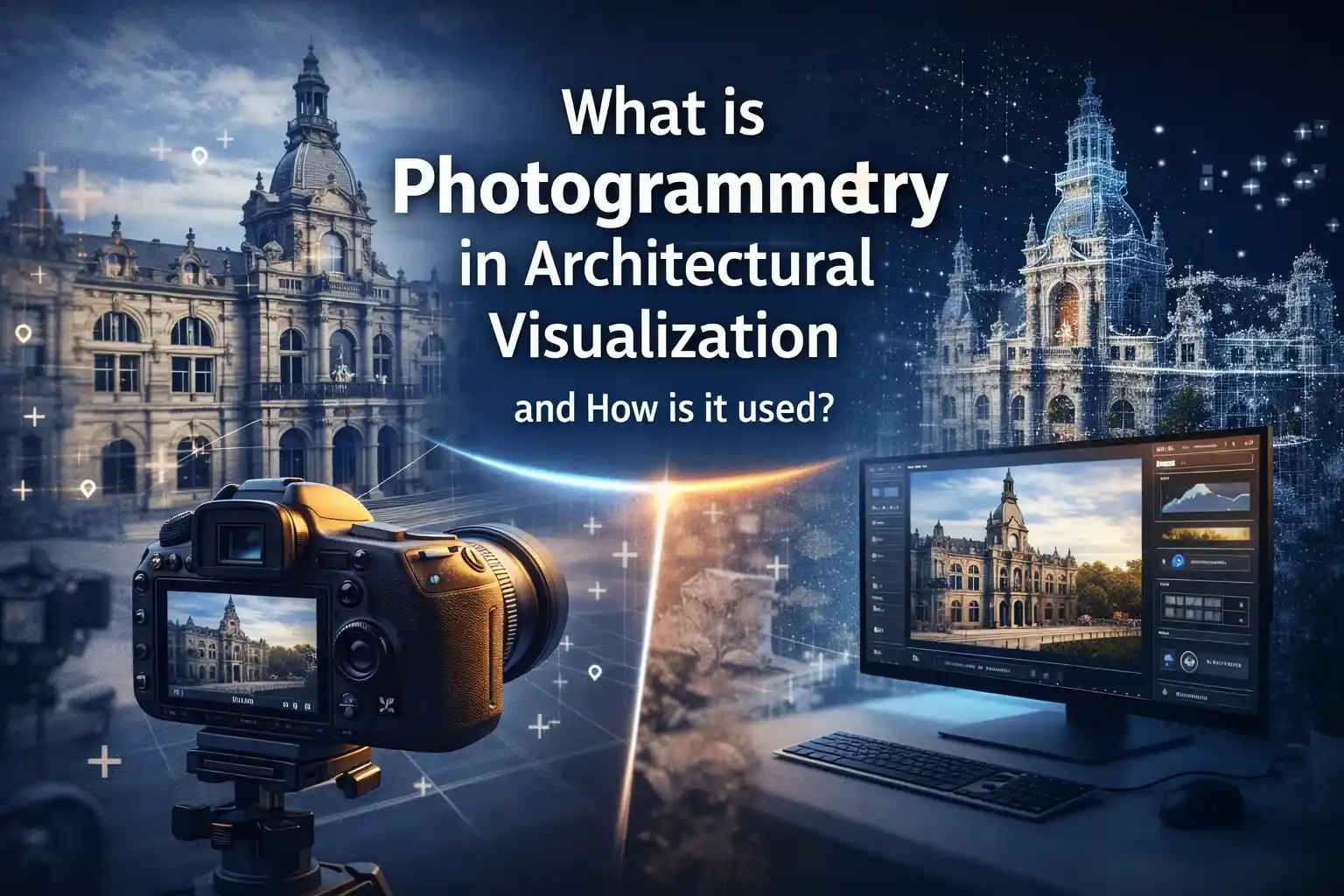
Photogrammetry in architectural visualization is used to create real 3D models. It is used to form photographs. It is used in the construction and design industry. It helps to produce detailed images. It gives good visuals to see the design.
This method improves the quality of presentation. It also helps clients to understand the project better. They can easily see the final project before even the start of the construction.
Photogrammetry is becoming a need for the construction industry. It is a tool used by architects and designers to work better.
Understanding Photogrammetry in Architectural Visualization
It is the process of capturing real-world images and converting them to a 3D digital model. And this is done by taking multiple photographs of the object or the space. The pictures are taken from many angles. The software is used to combine them into a single model.
The result is a real representation of the image. It includes the texture and shapes. It also includes the dimensions. This makes it very easy for architects to advance their idea. They can easily see what they are working on.
How Photogrammetry Works
The process has the following steps:
Image Capture
Good-quality photographs of the object are taken first. This image should cover all the angles. The image should contain the complete end data collection. The image should be good enough to make the final model of it.
Processing the Image
Software is used to analyze the image. This is done after the image is taken. The software checks the common points of the image. It connects them to the 3D structure. This step needs powerful tools. Everything should be done properly for accuracy.
Creating the 3D Model
A 3D model is made after the data is processed. This model includes textures and colors. This model also contains the details of the photograph. The result is a real digital version of the image. It resembles the original object or space.
Refining and Editing
The final step involves cleaning up the model and the errors removed in this step. This step also improves the quality of the model. It is made sure that the model is ready for use in architectural visualization.
Use of Photogrammetry in Architectural Visualization
Photogrammetry in architectural visualization is used in different areas of construction. It is also used in design.
Site Analysis
It is helpful to capture real site conditions. These conditions include terrain and surroundings. It also includes the existing structure. This information is useful for planning.
Renovation Projects
Photogrammetry is also used for renovation work. It allows designers to create proper models of the existing building. This is helpful in making good decisions about design.
Realistic Presentation
Photogrammetry improves the quality of the presentation. It provides a very realistic visual of the object. Clients can easily see the final look of the project. It is very helpful in real life.
heritage Preservation
Historical buildings can also be documented and preserved through photogrammetry. This is helpful to maintain the record for future use.
Benefits of Photogrammetry in Architectural Visualization
Photogrammetry in architectural visualization is very helpful. The main advantages are:
- high levels of accuracy and detail
- realistic textures and finishes
- time-saving compared to manual modeling
- better communication with clients
- improved decision-making.
These benefits make photogrammetry a valuable tool. That is why it is used in the modern architecture industry and design.
Role of Technology and Professional Services
Photogrammetry uses advanced tools. It needs expertise to achieve the best results. Many professionals take the help of an architectural visualization company. These companies handle such tasks. These companies use modern software. They also use techniques to create good-quality models. They create visuals that are very close to real images. They combine photogrammetry with 3D rendering services. This helps to produce a more detailed and attractive presentation.
Challenges in Photogrammetry
Photogrammetry is a very useful tool, but it too comes with some challenges.
- It requires a good-quality image for accuracy
- processing can take time, depending on the project size
- It needs skilled professionals and advanced softwares
- Large data files can be difficult to manage.
Despite all the challenges, photogrammetry is a preferred choice in many projects.
Future of Photogrammetry in Architecture
The future of photogrammetry is very promising in this field. The process is becoming faster with advanced technologies. It is easier to create a detailed model with new tools and software. The work becomes effortless and very accurate. This is changing the view of architects and designers about the presentation of their ideas. 3D rendering services combined with photogrammetry are also appealing for architects.
Conclusion
Photogrammetry in architectural visualization is used to transform real-world images. It changes the images into detailed 3D models. It is helpful for architects to create real visuals. Designers can improve their designs and communicate ideas more effectively. The applications of photogrammetry are wide. It is used in the analysis of the site and renovation. It needs proper tools and expertise. It is used in modern construction and design. Photogrammetry is becoming more popular over time.