
Bauhaus Architecture Explained: Features, History, and Origins
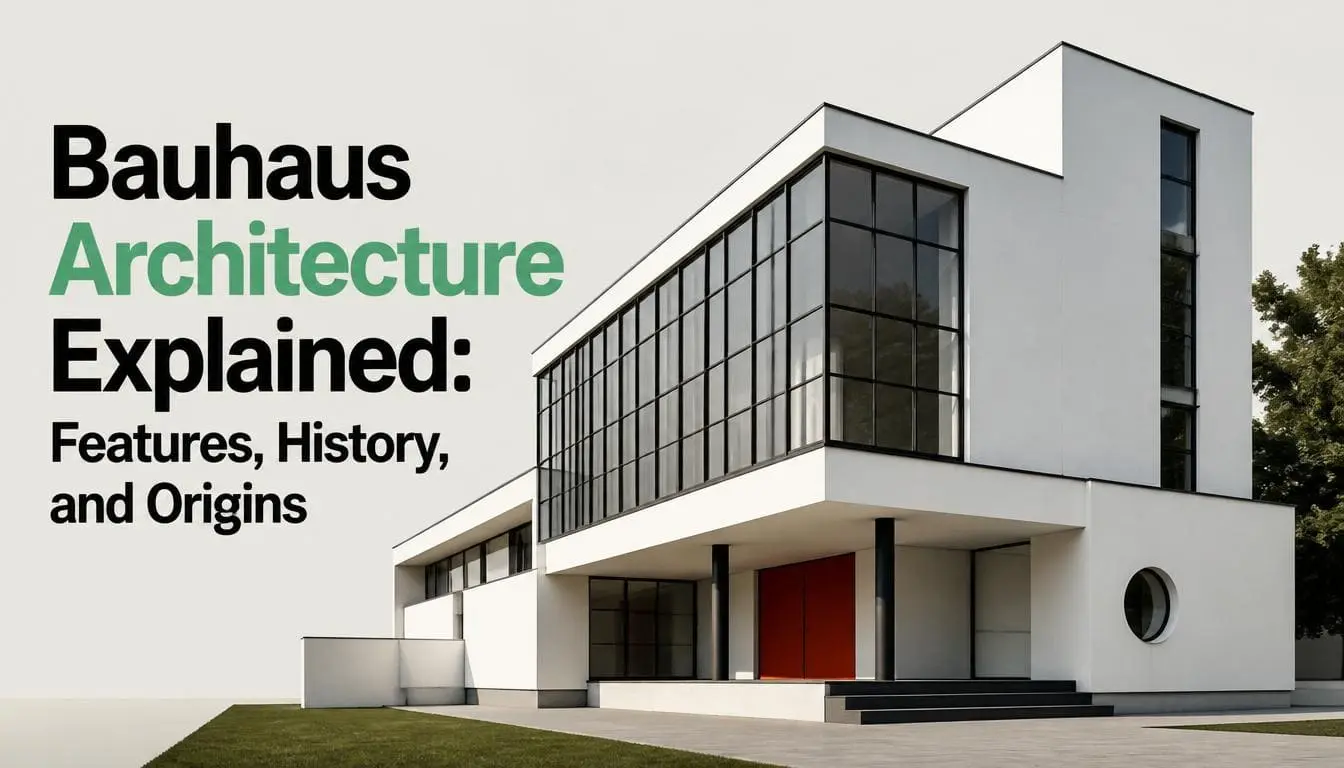
Bauhaus architecture is one of the most useful designs in history. Bauhaus school existed for only 14 years, but its ideas are still used in buildings and furniture. They are used in urban planning and product design across the world. This movement introduced a new way of thinking about architecture. It combined art and craftsmanship with technology in a holistic design.
Bauhaus designers used to believe that buildings should be functional and visually balanced. They did not focus on heavy decoration. Many modern structures reflect the principles of the Bauhaus style. Understanding its features can help to explain why this movement remains as a cornerstone of contemporary design.
The origin of Bauhaus architecture
This architecture began in Germany. Architect called Gropius founded the Bauhaus school in Germany. The artists believed that the design could help the country to come out of its economic problems. The architect Gropius wanted to unite fine arts and applied arts under one education system. People from different fields worked together to create practical and beautiful designs. The goal was to create designs to improve everyday life. Bauhaus means house of building. The name of the school represents the union of the architects.
The development of the Bauhaus school
The school operated in three separate cities.
Weimar
The school started in Weimar. The focus of the school was on craftsmanship. Students learned about metalwork. They also learned about ceramics and painting.
Dessau
The school moved to Dessau in 1925. This period is the prime of the Bauhaus. The founder designed the famous Bauhaus building in Dessau. The building became a symbol of modern architecture. The building featured large glass walls and a simple layout. These elements defined the characteristics of Bauhaus design afterwards.
Berlin
The school moved to Berlin in 1932. This was done under the leadership of Ludwig Mies. The school was closed in 1933 due to the opposition from the Nazi regime.
The ideas of the Bauhaus school spread throughout the world. It was through its teachers and students.
Core principle of Bauhaus
This architecture is based on some principles that are separate from traditional design styles.
Form follows function
The idea of the Bauhaus style was that the form should follow function. This means that the appearance of the building should be according to its purpose. Every element of the building should have a practical role. Unnecessary extensions were viewed as a wasteful thing.
Simplicity
Bauhaus designers liked the simple and clean forms. And buildings were designed using simple shapes such as rectangles and squares. The structures were very simple and easy to understand.
Unity of art and technology
The movement used modern industrial production methods. Architects believed that the technology and design should work together. They thought that it creates better products and buildings.
They filled the gap between artistic creativity and industrial manufacturing.
Key features of Bauhaus Style
Flat roofs
Flat roofs became one of the features of Bauhaus buildings. They gave the building a clean and modern look.
Large glass windows
Architects used large glass surfaces. It allowed natural light into the building. Glass curtain walls became a part of modern architecture because of the Bauhaus influence.
Open floor plans
Interior spaces were designed with fewer walls. This created a flexible layout.
Simple geometric forms
Simple geometric shapes dominated Bauhaus design. Straight lines gave a sense of order.
Industrial material
Bauhaus architects frequently used:
- Steel
- Concrete
- Glass
- reinforced materials.
This material showed the industrial age. It supported modern construction techniques.
Minimal ornamentation
Bauhaus buildings avoided decorative details like other traditional architectural styles. Their beauty came from their proportions and material. Their buildings represented functionality rather than decoration.
Contributors of the Bauhaus movement
The success of Bauhaus was made possible due to the group of talented architects and designers. Walter Gropius was the founder of the Bauhaus School. He established the vision and principles of the school. His work was the foundation for modern architecture. Mies van der Rohe became the final director of the school. Bauhaus design used the less is more approach of Mies.
Breuer became known for his furniture design. He also worked with the architecture. Steel tubing was used by him in the furniture design. Paul Klee and Wassily Kandinsky brought artistic theory to this architecture. They introduced creativity into the Bauhaus curriculum. It helped shape the movement’s unique educational approach.
Famous examples of Bauhaus
Bauhaus Dessau building
It is a famous example of Bauhaus design. Its glass facades and functional layout are a symbol of modern architecture.
Haus am Horn
Haus am Horn is one of the earliest examples of Bauhaus residential design.
Global influence of Bauhaus buildings
Bauhaus principles influenced architecture throughout Europe and North America. Many skyscrapers and office buildings still reflect the Bauhaus ideas. Many educational facilities and residential projects reflect Bauhaus buildings. A top visualization company often incorporates Bauhaus-inspired concepts. They create architectural presentations using this style’s clean form and clear layout. Firms offering the best architectural rendering services also use these principles to communicate architectural ideas clearly.
Bauhaus builds in the modern world
Bauhaus design is still used. Modern designers use the principles of simplicity and functionality. The movement has influenced:
- modern residential housing
- buildings, interior design
- furniture design
- graphic design
- product design.
Many minimalist designs can trace their roots directly back to the Bauhaus ideas.
Conclusion
Bauhaus architecture transformed the thinking of people about design and architecture. This movement introduced an approach that combines art and functionality. This design emphasizes simple form and industrial materials. It promotes open spaces and practical designs. It is a foundation for modern architecture. Bauhaus school existed for a short period, but its influence spread worldwide and still inspires architects of today. Bauhaus is the philosophy that shows good design can be beautiful and useful.