
Neoclassical Architecture vs Classical Architecture: What’s the Difference?
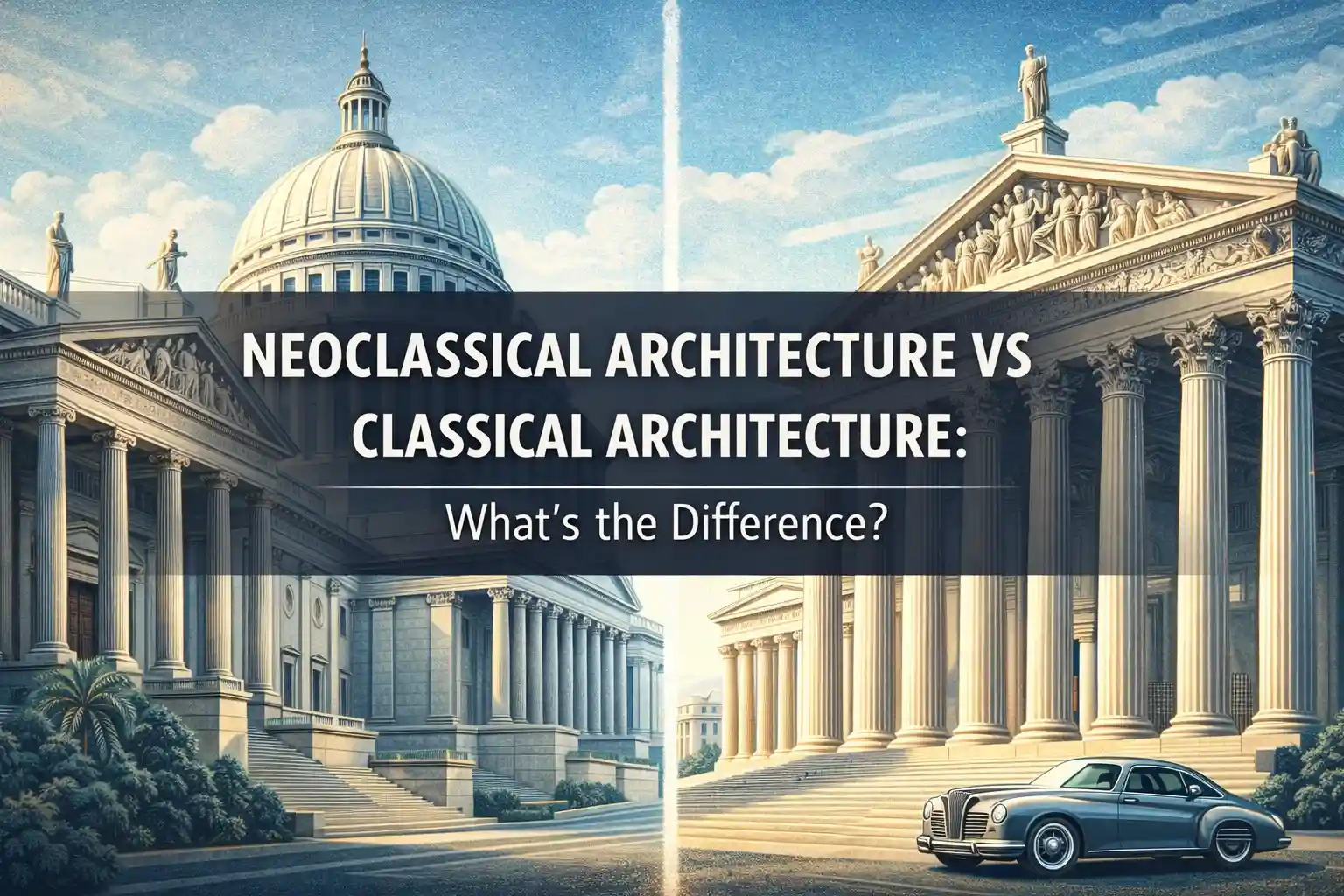
The comparison between Neoclassical Architecture vs Classical Architecture will make you understand the appreciation of the buildings. Architecture is one of the best forms of expression. There are a few styles that have made a deep connection with the built environment.
If you look at both of these designed buildings, they may look the same. But they are different in terms of history, cultural motivations, materials, etc. Understanding the difference between them will help you dig deeper into their features and other things. Design your buildings with a Top visualization company because they provide 3D visuals in images and animation. This helps in making the right decisions and saving the budget.
Keep reading to explore the differences between Neoclassical Architecture vs Classical Architecture!
What Is Classical Architecture?
It is a type of architectural style that came into being in ancient Greece and Rome. However, it was not simply a style. It was a complete architectural language. Architects focused on precision and religious purpose.
The Greeks developed three fundamental orders of architecture:
- the Doric
- the Ionic
- the Corinthian
You need to know that each architectural order did not only decide how the columns looked. It also controlled the size and proportion of all the main parts of a building. It includes:
- top beam (entablature)
- decorated band (frieze)
- triangular roof front (pediment)
- base platform (stylobate)
The Romans learned a lot from Greek architecture. They improved it even more. They created three things: arch, the vault, and the dome. Due to new building methods, they used to create bigger indoor spaces as compared to Greek. Plus, this architecture types was also connected to religion.
However, every part of the design had a clear purpose. Decoration was always less important than the structure of the building. The best features of Classical Architecture
- Three Classical Orders
- Symmetry and proportion
- Pediments
- Colonnades
- Friezes and entablatures
- Use of natural stone
- Minimal interior space
- Religious and civic function
- Open-air integration
What Is Neoclassical Architecture?
This style of architecture started in Europe in the mid-1700s and remained till the 1800s. It became popular because many people felt that the Baroque and Rococo styles were too fancy. Whereas architects wanted simpler and more balanced designs.
During this time, several other discoveries also helped to grow this style.
Johann Joachim Winckelmann also enhanced this style. He praised the simplicity of the old art style. His ideas encouraged architects to follow classical design principles.
This style was not just copying old buildings. It was a thoughtful use of classical ideas with modern features. However, the 18th and 19th centuries were times of new ideas and the creation of new nations. Many governments used classical architecture because it reminded people of old democracies.
Some famous architects helped spread this style.
- Robert Adam in Britain
- Claude Nicolas Ledoux in France
- Benjamin Henry Latrobe in America
They carefully studied ancient features and measured them. These books helped spread this architecture across Europe and the Americas. The main features are:
- Revival of Classical orders
- Grand, imposing scale
- Flat or shallow-pitched roofs
- Emphasis on the facade
- Use of new materials
- Symmetrical floor plans
- Porticos and colonnaded porches
- Restrained ornamentation
- Large windows and interior light
- Civic and governmental function
The Core Differences
If you hire the Best Architectural Rendering Services for your residential or commercial projects. You can better achieve the output according to your concepts.
Now, let us show you the major differences between these two styles:
Historical Context
Classical architecture was created by ancient Greeks and Romans. It was the natural expression of their culture.
Neoclassical architecture is always about looking backward. It is a revival of different features for contemporary purposes.
Structural vs. Decorative Use of Columns
In Classical architecture, the columns were structural. You can say they held up the building.
However, in Neoclassical design, columns are added in the exterior part to decorate the building.
Materials and Technology
The ancient Greeks and Romans constructed their projects with the help of available materials. It includes:
- Marble
- Limestone
- volcanic concrete
Neoclassical architects were working at a time when technology was expanding in every field.
Materials like brick and cast iron were used to build the main structure of buildings. These types of materials were usually hidden behind stone. They were designed in a way to look like classical architecture. This is the major reason that architects created much larger indoor spaces.
Interior Design
Greek temples had dark interiors that served primarily as a home for cult statues.
Neoclassical buildings were designed with lavishly decorated interiors. It included:
- grand staircases
- coffered ceilings
- gilded plasterwork
Scale and Ambition
Neo buildings are often much bigger than the ancient buildings. For example, the Lincoln Memorial in Washington, D.C. is larger than the Parthenon that inspired its design.
The large size was possible because of modern engineering methods. Plus, they used stronger building materials.
Philosophical Motivation
Classical style came from the religious belief and available craft knowledge.
However, the Neo style was driven by Enlightenment ideology. At that time, people believed in democracy and universal human values. They connected these ideas with ancient Greek and Roman civilization.
Conclusion
Both architectures look similar, but they are not the same. Classical buildings were created by ancient Greeks and Romans for their own religious life. Neoclassical buildings came much later. The architects reused old ideas for modern times. They show how modern societies want to connect themselves to the past designs.