10 Architectural Rendering Styles Every Designer Should Know
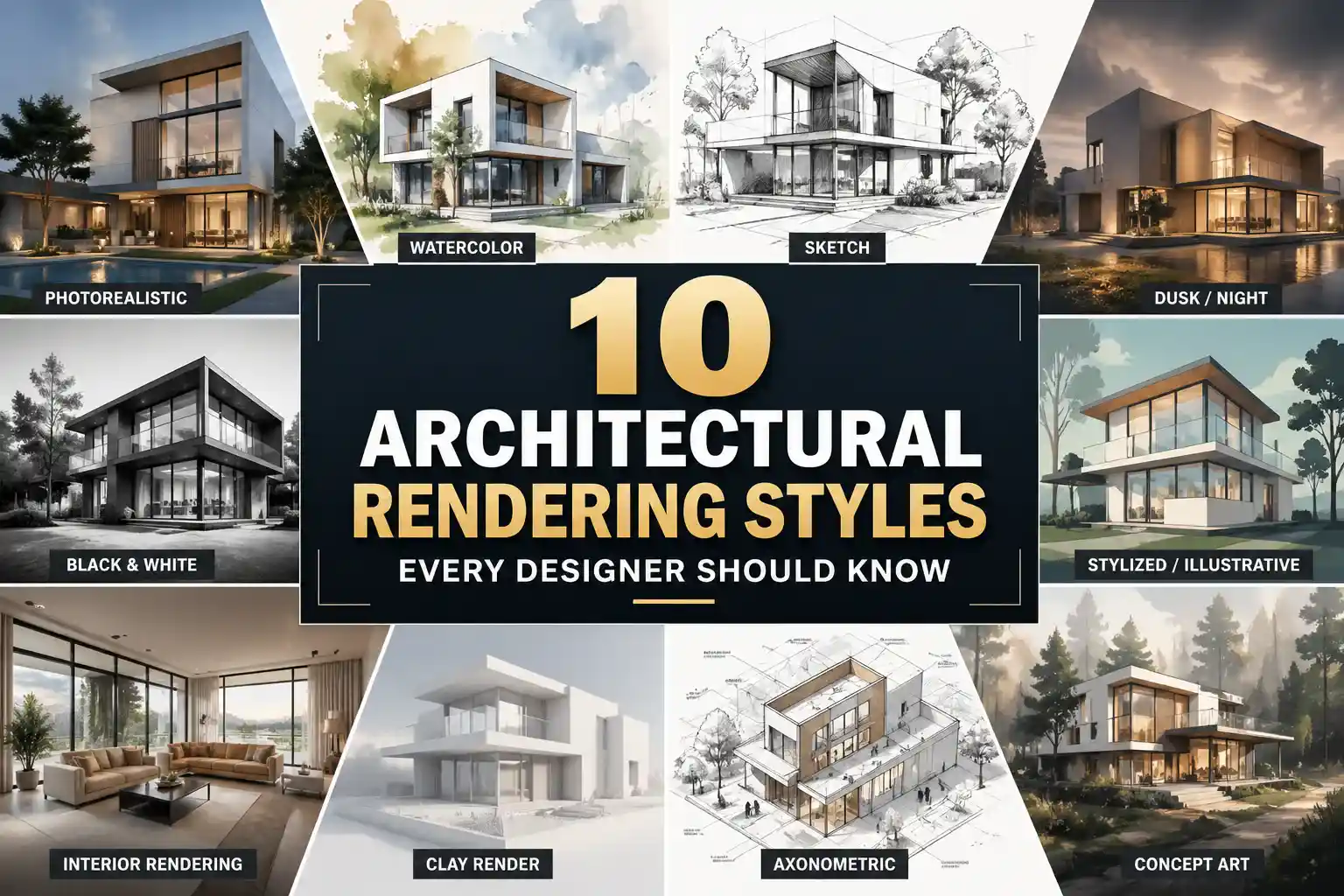
The architectural visualization industry has entered a new era. Today, the rendered image looks exactly like a real photo. The tools architects use are quicker and easier than ever. With the use of AI, you can make a beautiful picture in seconds. The clients can even use VR goggles to walk through a house virtually before even a single work is done. This helps architects to share their ideas and sell their designs much better. But, having good tools is not enough!
You have to pick the right style. It changes how people think about a building and helps them say “yes” to the plan.
According to the studies, the best pictures sell 40% faster than those with just basic maps. However, the look of the picture is what really decides and connects with people. For this reason, the investors get professional architectural rendering services from a reliable company. they provide them with realistic views, either in the form of images or animation.
Read this guide to understand the top 10 Architectural Rendering Styles Every Designer Should Know!
The 10 Architectural Rendering Styles
1. Photorealistic Rendering
This is the gold standard. It produces images that are not different from the actual photos. Every type of material whether it is the grain of wood or the transparency of a glass, is captured with accuracy. This type of style is commonly used for preconstruction marketing and client presentations. Moreover, the AI tools provide realistic outputs that used to take days of high-end computation can now be generated in minutes!
So, this is one of the highest ROI rendering styles for architects working on the final presentations.
2. Hyperrealistic Rendering
Hyperrealistic rendering exaggerates details to create a high visual intensity. It feels more real than real itself. Everything is in microscopic detail. The pores in stone and the dust particles in the air are part of this rendering accuracy. It is combined with atmospheric effects like light. However, this style delivers a perfect quality that is especially powerful for luxury interiors and marketing
3. Watercolor Rendering
It is one of the most favourable styles in architecture. This translates digital geometry into soft imagery with gentle colour washes and warmth.
This style is perfect during the early design phase. It is the time when a project is in an aesthetic mode that needs to be communicated without technical details.
It is particularly effective for residential projects where human quality is desirable. Modern tools apply watercolor style in a single click.
4. Sketch and Line Drawing Rendering
This tile copies pencil or ink drawings. The most important 3 forms are:
- Raw
- Gestural
- immediate
It is more focused on creative thinking to make it ideal for early client consultations and competition entries because hair design matters more than the finished look.
The plus point of this style is that it is open to change which is a strategic advantage for coping with early-stage client feedback.
5. Clay Model (White Model) Rendering
Removing all color, texture, and material information. The white model shows architecture in its purest state.
Only geometry, volume, and shadow remain.
This style is considered important for site planning and structural reviews where the focus must remain on logic rather than surface finish.
In portfolio work, the clay model aesthetic has a bold graphic quality.
6. Ambient Occlusion Rendering
It is considered as the black-and-white photography of architectural visualization.
This rendering produces clean imagery that focuses on how volumes relate to one another in space. This enhances structural legibility without the distraction of color or materials. It makes it useful for presentations that fill the gap between sketch work and full 3D development.
7. Collage Rendering
Art is made from many pieces. Just like that, this style mixes 3D shapes with real photos and hand-made sketches. It puts everything into one picture.
However, the focus of this style is on the feeling and the building of the story. Which makes it look perfect and real!
8. Atmospheric and Mood Rendering
Other than material accuracy, it focuses on:
- Light
- Shadow
- Weather
- time of day
It is to build an emotional connection around a space.
A golden hour or a mist-covered facade at dawn converts a boring building into a perfect experience.
This is best for cultural institutions where emotional connection is important.
9. Scale Model Rendering
This style copies the handcrafted quality of a miniature model made from foam or cardboard.
It provides clients with a simplified design without requiring an actual physical model to be built. It is best for presentations to get approvals.
10. Real-Time and AI-Enhanced Rendering
This is the fastest-growing category!
It helps designers to explore and present their projects as living environments. Software like Enscape and others provide instant walkthroughs. The clients can change lighting conditions, materials, and camera angles easily. These visuals are used on different social media platforms for marketing purposes.
Conclusion
Before choosing one of these styles, you need to understand your target audience. You need to analyze the public building needs. If you want to attract investors, then you need to implement drama and scale. However, the right rendering style is the key to speaking it fluently. So, start learning to use the modern tools and styles to increase your business.