3D Rendering for Real Estate Marketing: Complete Workflow Guide
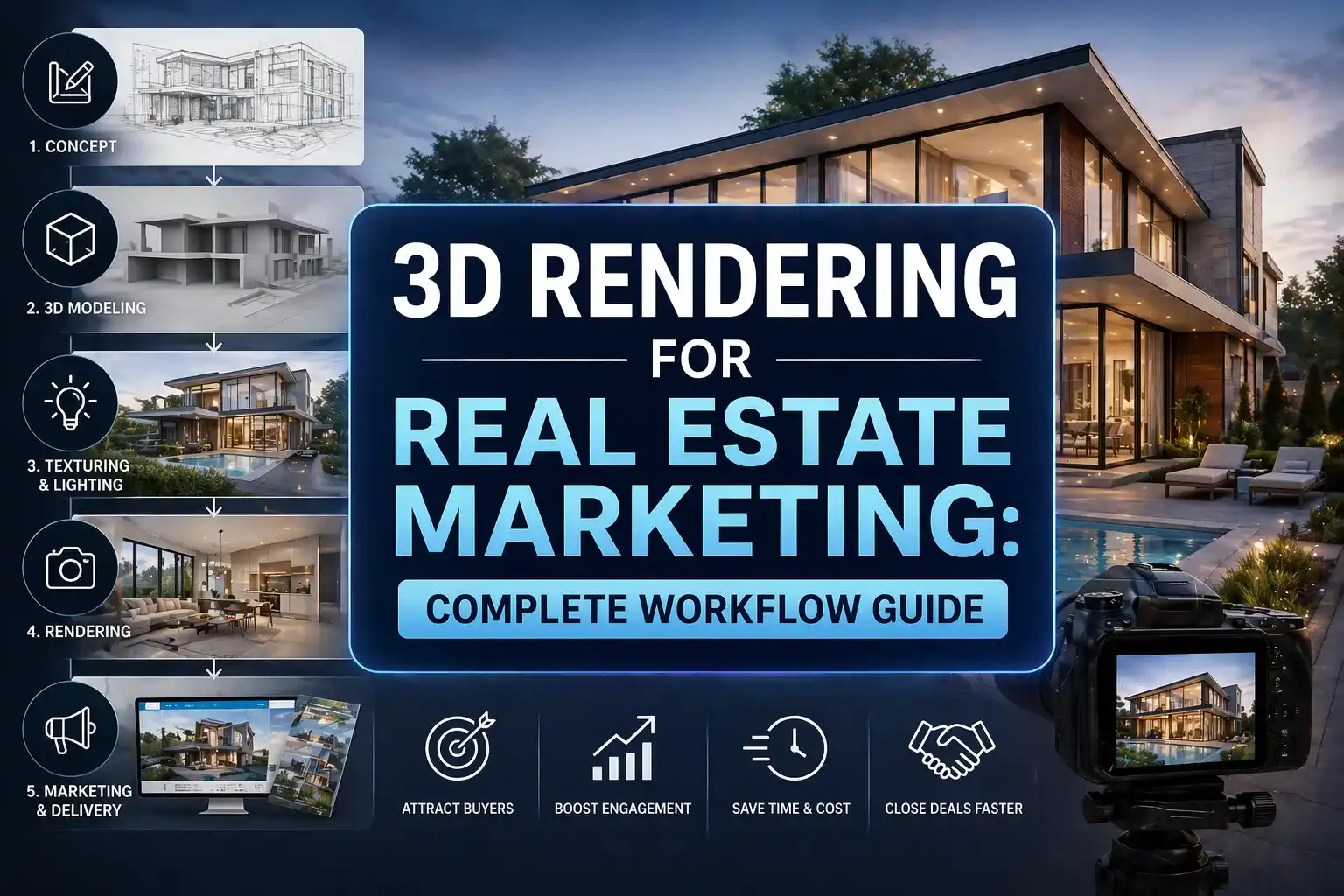
3D rendering has always been about helping people picture themselves in a space they desire to design and live. This modern technique is best when the space does not yet exist. If we look into the modern needs and complex designs. The use of rendering is extremely important to make the right decisions regarding the building design. If you only have a blueprint, then it is not enough now! For this reason, rendering has become the backbone of modern real estate marketing.
Various investors and building owners waste their money due to the wrong decisions they have made in the design phase. Plus, this is the reason that real estate companies do not sell their properties faster. But, with the perfect 3-D rendering services, they market their properties on social media platforms and send them quickly. With the realistic visuals, the clients make quick decisions.
This guide is perfect for developers and agents to know about the importance of 3D Rendering for Real Estate Marketing!
What Is 3D Rendering in Real Estate?
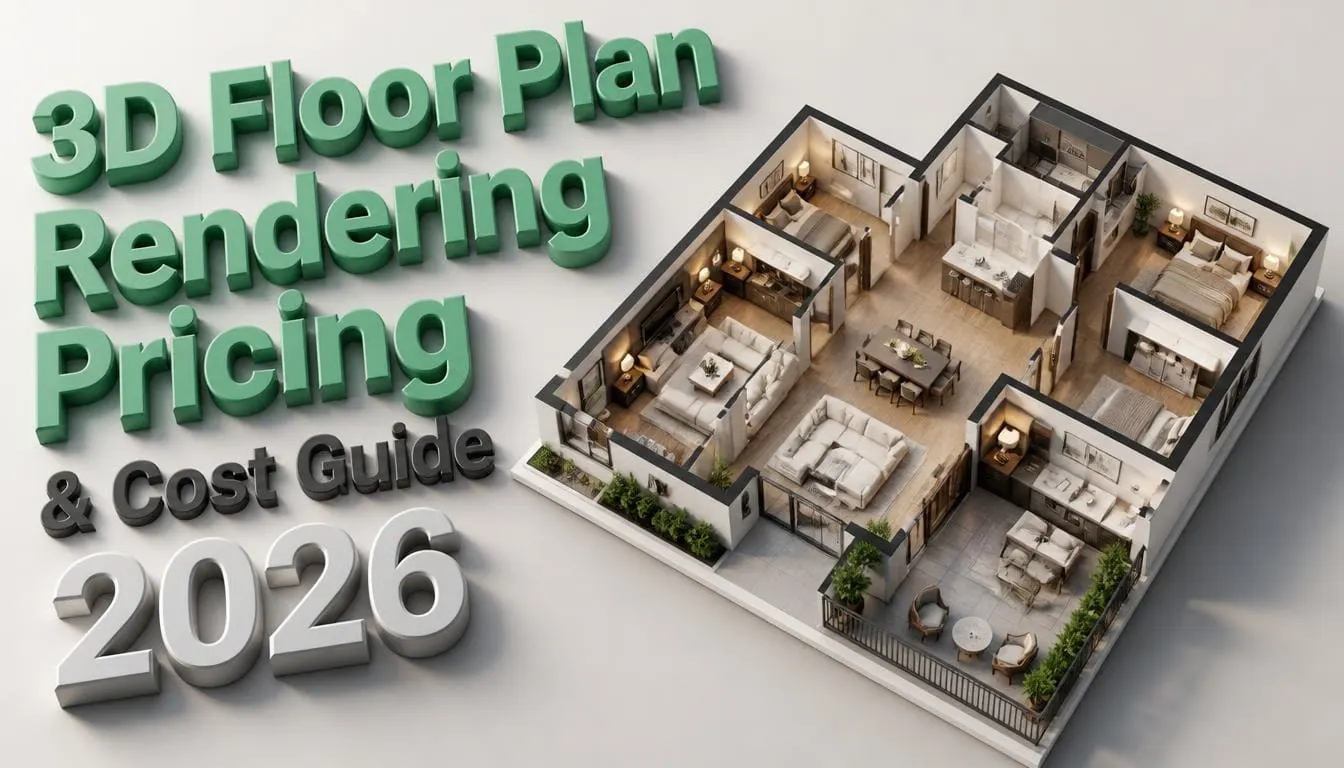
It is the process of using advanced software to create realistic-quality images of the property before it is built. They are not cartoons or sketches; they look like actual images.
Instead of relying on static photos or flat blueprints, it is best to get renderings that allows to present interior and exterior design. The images look like you are watching a real constructed space. The companies that have more budget, they get animation for the whole property and sell their projects with a higher profit margin.
Why 3D Rendering Is No Longer Optional!
Real estate marketing has one of the biggest challenges that separates it from the other categories. This means that you are selling something that does not exist yet. By evaluating these numbers, you can never ignore their importance:
- Properties marketed with 3D tours receive 87% more views than those without
- Listings with professional visualization get clicked 40% more often
- Buyers are 95% more likely to inquire after viewing a 3D walkthrough
The Complete 3D Rendering Workflow
Step 1: Project Brief and Asset Collection
Keep in mind that every rendering project begins with gathering the right materials. This includes several elements:
- architectural drawings
- CAD files
- floor plans
- material specifications
- reference images
3D rendering combines easily with popular CAD and BIM processes. This makes the project management simple.
Customization options in lighting are available. You can also change materials and other minor details according to your choice.
You can experiment with different styles to attract your target audience.
Step 2: 3D Modeling
Then a reliable 3D architectural visualization company creates model of the property.
Everything is constructed in 3D space. They use software like 3ds Max, Revit, etc.
The design includes walls, windows, and even the smallest detail.
Step 3: Material and Texture Application
After the modelling process, the experts apply surface textures.
- the grain of the wood floor
- the shine of marble countertops
- the softness of a fabric sofa
Modern rendering software now shows how marble reflects light and absorbs it.
This emphasises the fact that the buyers can see the difference between a brushed steel and polished chrome.
Step 4: Lighting Setup
The next is one of the major reasons that can make or break the render. Lighting is important to create a realistic render. The experts choose the time of the day and the placement of everything.
The best time is the golden hour. It creates an emotional response that buyers connect with.
Step 5: Rendering and Post-Processing
The software then evaluates the final image.
This is the most important rendering step in which the complex 3D scenes are created in minutes, not hours.
After rendering, artists do post-production work.
It is done in Photoshop to add people, trees, and other finishing touches.
Step 6: Revisions and Final Delivery
The client reviews the renders and requests adjustments. Final images are delivered in high resolution for use across all marketing channels.
Where to Use 3D Renders in Your Marketing
Some specific scenarios are very important to include in 3D architectural rendering.
- sales decks for pre-construction projects
- digital advertising campaigns on platforms like Google Ads, etc.
- websites and virtual tours, etc.
Social media is another powerful channel. A single photo of an amazingly rendered kitchen on social media can get likes, shares, etc.
You can use a strategy of Before-and-after slideshows. Moreover, 360-degree walkthroughs also work well!
What’s New in 2026
- AI-powered rendering that takes quick minutes to generate realistic images
- Interactive, real-time renders in which a single swap changes the time of the day
- Desktop viewing is becoming secondary. Most buyers first look at properties on their phones. This means 3D experiences need to work flawlessly on smaller screens.
Conclusion
3D rendering for real estate marketing has become a standard way to sell properties faster. Whatever you are selling, you need to start your campaign with the help of realistic renderings. The workflow is clear and the results are measurable. Individuals who can create life-like images and animation. They have the power to attract clients to their portfolio. If you haven’t made 3D rendering the major part of your marketing strategy yet, then go with it. Or get expert rendering services from a reliable company.