Federal Architecture: Definition, History, Key Types, and Modern Trends
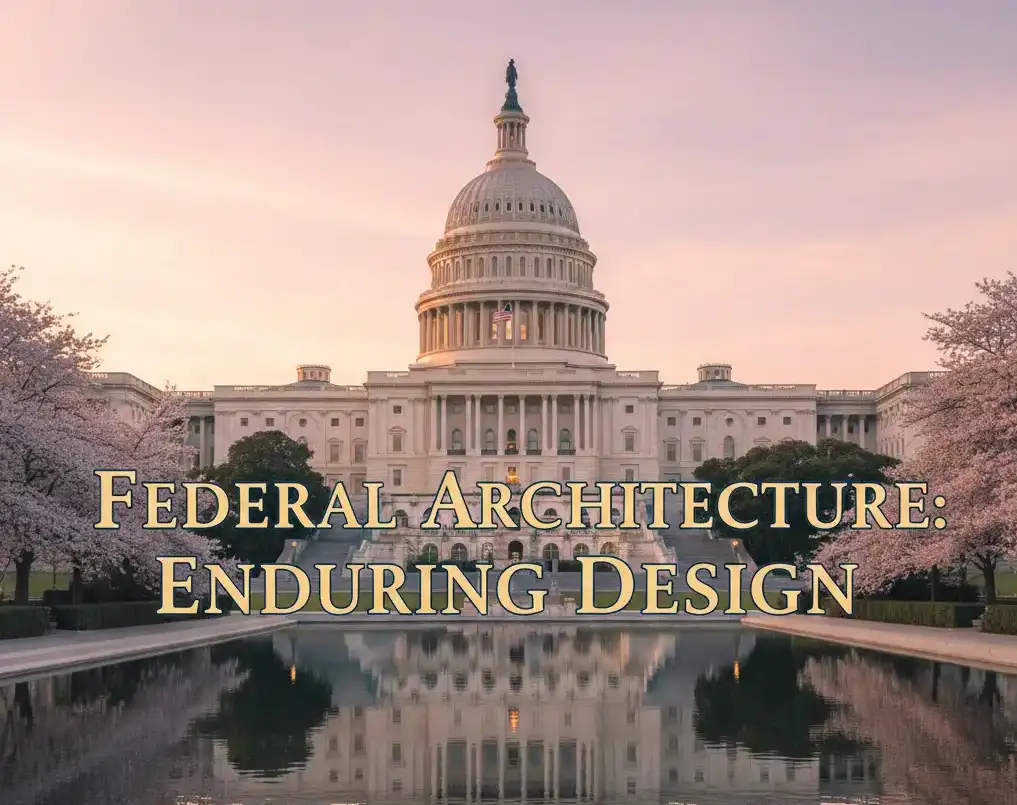
Federal Architecture is the first famous style of the USA that emerged from the revolutionary spirit of a new nation. It highlighted the best classical ideas. However, this different style was popular from 1780 to 1840. It is still influencing the design in today’s architecture.
Modern buildings are designed with the help of the latest methods. Professional architectural rendering services are used by investors to visualize the concepts of their creative design in 3D form. They combine the features of modern and Federal Architecture styles to create a unique space.
Understanding Federal Architecture
Federal Architecture is the classical architecture. It is also called the Adam style. This type of style was inspired by the Georgian style. It was more enhanced with delicate and finely drawn details.
The word Federal refers to an early time in American history. It was the time when the country was working on forming its federal government. However, during this time, various new buildings were constructed.
This Federal Style Architecture was inspired by the designs of Andrea Palladio.
Short History
Federal architecture is the building style that was used by Americans to show strong democratic values.
To do this, the founders looked to:
- Ancient Greece for ideas about democracy
- Ancient Rome for ideas about republican government
However, the connection to classical history shows that the country believed in freedom, balance, and order.
The Federal style was inspired by Robert Adam. He used to study Roman buildings. He brought the ideas into modern design. His work became popular in Europe after the discovery of ancient cities.
Key influences include:
- Roman architecture and classical design
- Well-balanced layouts
- Decorative details
The Federal style is similar to:
- Regency architecture in Britain
- Biedermeier style in Germany
- Empire style in France
Different types of architectural styles
Exterior Features
This type of architectural style uses plain surfaces with small details. It was decorated with panels, tablets, and friezes, with a smoother exterior.
Structural Elements
- A simple square or rectangular box
- Two or three stories high
- Houses feature pitched roofs with two or three stories plus a basement
- Brick laid in Flemish bond
- Hip roofs and simple gable shapes are among the most popular Federal roof styles
Distinctive Details
- The bald eagle was a common symbol used in this style, with the ellipse a frequent architectural motif
- Federal details may feature swags, garlands and urns
- Decoration could be found at the entrance, including leaded fanlights, leaded sidelights, and Doric columns
- Symmetrically hung six-over-six window courses with simple masonry lintels
Interior Design
In Federal-style homes, the rooms were built in octagon shape. The outside buildings used to be in a square and rectangular shape.
Common interior features included:
- Small wall spaces like niches and alcoves
- Arches and curved door and window frames
A key feature of the Federal style was the oval or elliptical shape. This shape appeared in many places, such as:
- Door and window designs
- Furniture details and hardware
- Decorative moldings and fan-shaped windows
Inside colors were usually soft and calm, with:
- Light or muted wall colors
- Very little white trim
- Simple but fine carvings and inlays
Decorations often showed patriotic symbols, including:
- Eagles
- Shield-shaped designs
- Classical urns
Modern Trends
Historic Preservation
Federal architecture is still famous in this modern industry. Such types of houses are quite old, which is an honor and a responsibility to live in.
Many Federal homes are in historic districts. This means:
- Repairs and changes must follow strict rules
- Original features must be kept and protected
- Renovations need extra care and planning
Modernization
Today, various homeowners update Federal-style homes to make them comfortable for modern living. Common modern updates include:
- Improving heating, plumbing, and electrical systems
- Changing room layouts to fit modern lifestyles
- Adding garages or sunrooms
- Installing modern lighting while keeping the classic look
The goal is to combine old beauty with new designs. With the help of the Architectural Visualization Company, you can see all the features in 3D images and animation. This will help you make the right decisions.
Contemporary Design Influence
Such types of styles are still used in modern homes and designs. These details often looked with classic styles. The most popular features are:
- Balanced and symmetrical designs
- Clean lines and simple shapes
- Oval forms, arches, and classic proportions
In modern homes, the style may look:
- More simple and less decorative
- Clean and straight-lined
- Mixed with modern or minimalist design
Market Appeal
Federal-style homes are still popular today because:
- They are well-built and carefully designed
- Their balanced shape makes them easier to maintain than very decorative Victorian homes
- They have historical importance and timeless beauty
Conclusion
Federal Architecture is still affecting modern architecture. You can also take ideas from its features and mix them with modern concepts. It will help you achieve the right design for your building with comfort. However, the best thing is to save your time and money with the help of modern visualization methods. It will help you achieve the desired designs.